Trump Halts Iowa Explosive Detonation Pending Court and Governor Approval
The President ordered a pause to a planned military operation to detonate unstable lead azide in Iowa until the Eighth Circuit Court and the state's governor-elect provide their consent.
By Alina Salazar ·
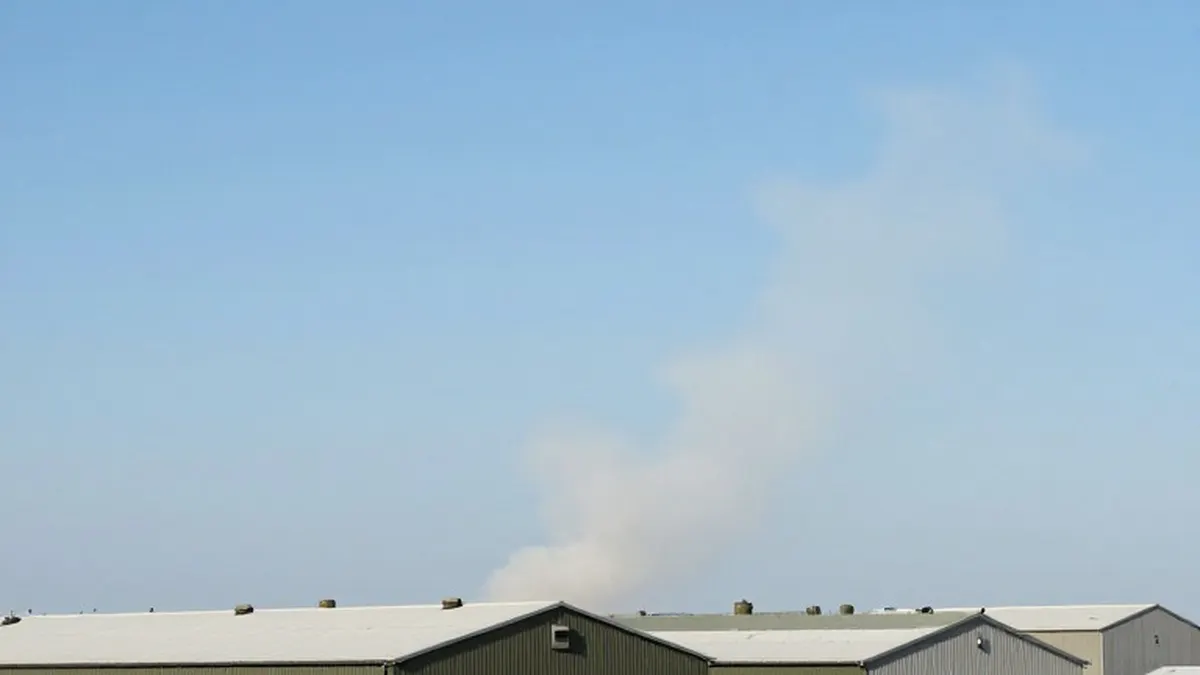
President Donald Trump issued a directive on Monday to temporarily halt a military plan to detonate degrading lead azide at the Iowa Army Ammunition Plant. The operation, which involves removing hazardous materials, will not proceed unless the U.S. Court of Appeals for the Eighth Circuit grants approval and the incoming Democratic governor-elect, Rob Sand, agrees to the plan.
In a lengthy post on Truth Social, the President explained that while he believes resolving the long-term problem is the proper course of action, he is deferring to legal and state leadership. He stated that if either the courts or the governor-elect do not agree, the military will have no choice but to pause the controlled removal. In that scenario, the incoming governor would be held responsible for any resulting death or destruction caused by the hazardous situation.
The Army has already postponed the detonation multiple times. Originally scheduled for Friday, the event was moved to Monday and then again to Wednesday to allow for better weather conditions and to ensure all mitigation measures were in place. Acting Army Secretary Adam Telle had previously noted that delays were necessary to avoid a forecasted temperature drop that could further destabilize the material.
The need for the operation stems from a safety review conducted in March 2026. The review identified a stockpile of lead azide, a sensitive primary explosive used in munitions, that had degraded and crystallized over time. This chemical change turned the material into an unserviceable hazardous waste that is extremely sensitive to shock and friction, making safe transport to off-site facilities difficult.
Local communities have been advised that the detonation will release a plume of dust containing lead particles. While modeling predicts air levels will remain below the threshold requiring EPA protective actions, residents in Middletown can expect loud noise, ground vibrations, and a dust cloud that may linger for up to an hour. The temporary effects are a trade-off for the safety of a controlled explosion rather than an uncontrolled one.
Legal complexities have added to the timeline. A challenge was filed last week, and the Eighth Circuit granted an administrative stay of the EPA emergency permit. However, the U.S. government filed a document on Saturday stating the Army intended to proceed under an emergency exclusion from certain regulatory requirements. The filing argued that a controlled detonation by November 24 was necessary to protect the public from a greater threat of spontaneous explosion.
Despite the Army’s announcement on Sunday that the detonation would occur on November 25, Trump’s Monday post clarified that the project would wait for explicit approval. He described Iowa as a special place and noted that the current weather is optimal for the response. The President emphasized that experts believe the material has a substantial chance of exploding on its own, making the controlled operation a safer alternative to letting the situation fester.
The decision underscores a collaborative approach between the federal military, the federal judiciary, and state leadership. By waiting for the Eighth Circuit’s agreement and the governor-elect’s sign-off, the administration aims to ensure the operation is both legally sound and politically supported. The pause allows for final negotiations while the hazardous materials remain in storage.
More News · National news · Report a business · Got a Story?