Judge pauses Army plan to detonate lead compound in Iowa
A federal court order delays the destruction of unstable lead azide at the Middletown ammunition plant, leaving residents awaiting a Monday explosion.
By Ama Romero ·
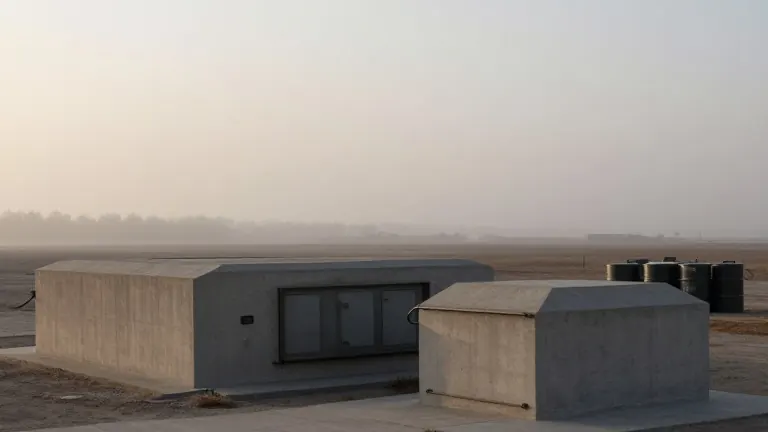
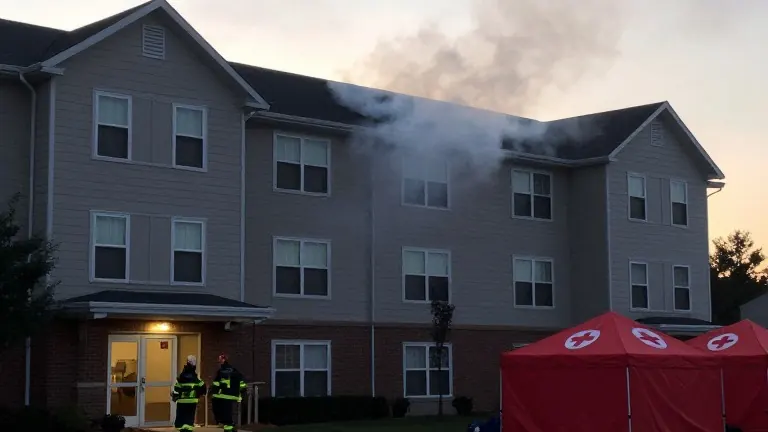
A federal judge ordered the United States Army to pause its plan to detonate five tons of lead azide at the Iowa Army Ammunition Plant in Middletown on Thursday. The court intervened after environmental groups challenged an emergency permit issued by the Environmental Protection Agency. The detonation, originally scheduled for Friday morning, is now set for Monday.
The Army discovered the unstable compound in March during routine surveillance of bunkers. Acting Army Secretary Adam Telle stated that the material had degraded to the point where it was extremely sensitive to friction or movement. He explained that packing or transporting the drums posed an unacceptable risk of accidental detonation. After consulting with experts and the EPA, officials concluded that a controlled explosion carried the lowest immediate risk.
The military canceled a previous contract with MuniRem Environmental, a Georgia-based firm that used chemicals to neutralize munitions. The Army cited safety concerns for the cancellation. Valentine Nzengung, the chief executive of MuniRem, said the Army told him that controlled detonation was the safest method. The company received emails indicating the decision was not based on deficiencies in their technical approach.
Iowa Governor Kim Reynolds activated a state emergency operations center on Friday. She said state agencies are coordinating with the EPA and Army to monitor the situation. In nearby Illinois, Governor JB Pritzker urged for more transparency after speaking with Telle. Illinois officials warned that the lead plume could affect western and central parts of the state under current weather forecasts.
Thien Chau, a senior attorney at Earthjustice, argued that the cleanup requirements in the current permit are inadequate. She noted that there is insufficient understanding of how far the plume would spread or which bodies of water, including the Mississippi River, would be blanketed with lead dust. The EPA planned to file a response to the court order by Sunday.
The Justice Department cited a federal regulation in its notice to respond to the emergency motion. The regulation allows the Army to detonate material without EPA approval if there is an immediate threat to health or safety. Rachel Rintelmann, a managing attorney at Earthjustice, described this regulation as an extraordinary backstop for extreme situations. She urged the Army not to rely on it to sidestep judicial review.
Dr. Sameer Vohra, director of the Illinois Department of Public Health, stated that there is no safe level of lead in the body. He warned that inhaled or swallowed lead poses serious health risks. Residents in affected areas have been advised to stay indoors with windows and doors closed for one to two days after the detonation. They were also encouraged to use portable air cleaners with HEPA filters.
The Army, the Department of Health and Human Services, and the EPA issued a joint statement on Friday afternoon. They said officials have meticulously planned for the event since March. The agencies stated they are prepared to take extreme mitigation measures to ensure there is no risk to the public.