Appeals court allows Iowa lead detonation to proceed as new governor elect defers to federal officials
A federal appeals court denied an emergency request to stop the Army from detonating hazardous lead material in Iowa, a move that leaves the scheduled operation in uncertain hands while the governor elect urges the administration to release more public information.
By Ama Romero ·
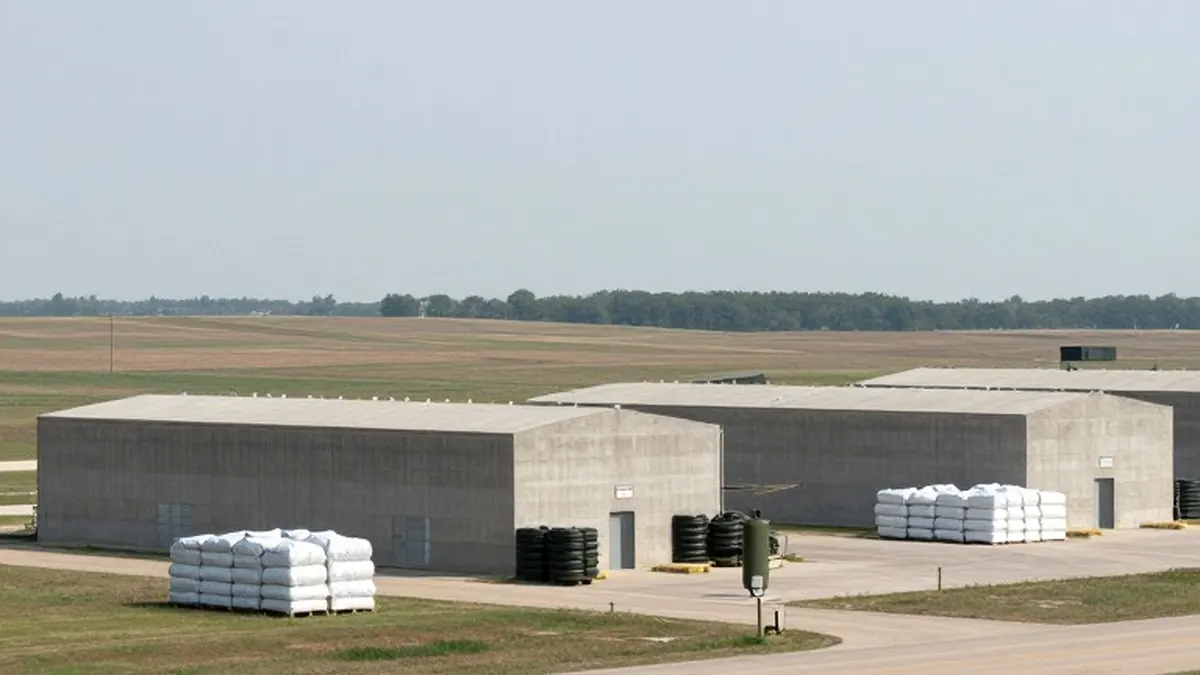
The Army’s plan to detonate tons of explosive lead material in Iowa remains in a state of uncertainty as of Monday, following a decision by a federal appeals court to allow the operation to continue. The legal dispute has been further complicated by Iowa Governor elect Rob Sand, a Democrat, who stated that he is leaving the final decision to President Trump and the federal courts.
Earlier in the day, President Trump indicated that while he personally supported the detonation of the lead-containing munitions, he would defer to the incoming governor and the judiciary. It is not yet clear if the detonations will proceed on Wednesday as originally scheduled, given the shifting dynamics between the executive branch, the judiciary, and the state leadership.
In a post on the social platform X, Sand argued that the administration should base its decision on the data collected by experts who have been present in Middletown for several weeks. He emphasized that the federal government has been on the ground for months and possesses the necessary information to make an informed choice.
Sand also renewed his request for the administration to share more details with the public regarding the detonation process. He stated that everyday Iowans have the right to understand how Middletown reached its current situation and why the administration believes this specific path is the best option. He noted that he has asked the federal government to share the same briefing information he has received as soon as possible.
Simultaneously, a three-judge panel of the 8th U.S. Circuit Court of Appeals denied an emergency request from the Iowa Environmental Council and the Sierra Club. The environmental groups sought to block an Environmental Protection Agency permit that authorized the activity while their broader legal challenge continues. They argued that the EPA bypassed regulations and failed to provide adequate public notice, potentially exposing thousands of families to toxic dust.
In an unsigned opinion, the judges acknowledged the significant risks associated with the Army’s planned detonation of degraded lead azide. However, they noted that the degraded explosives also present a risk of an uncontrolled explosion, which would lack the safety measures provided by the current permit.
Rachel Rintelmann, an attorney with Earthjustice who represents the environmental groups, said the groups respect the court's decision to let the Army proceed. She maintained that the Army created the emergency through neglect and owes the people of Iowa more information and safeguards for their health.
Trump wrote on Truth Social that he had ordered the military not to proceed until the Eighth Circuit agreed to the operation and Governor elect Sand approved it. He warned that if neither agreed, the administration would be forced to hold the incoming governor responsible for any death or destruction caused by the hazardous materials.
The Army announced earlier this month that it planned to detonate the degraded lead azide at the Iowa Army Ammunition Plant in Middletown. Officials described this as the safest way to eliminate an explosive safety hazard, though they noted the process could create a plume containing lead, a toxic metal that is particularly harmful to children and adults.
More News · National news · Report a business · Got a Story?