Ukrainian strike on Russian corvette in Libya signals wider conflict
A nighttime attack on a Russian warship in Benghazi has intensified concerns that the Ukraine war is expanding beyond its original borders.
By Leah Collins ·
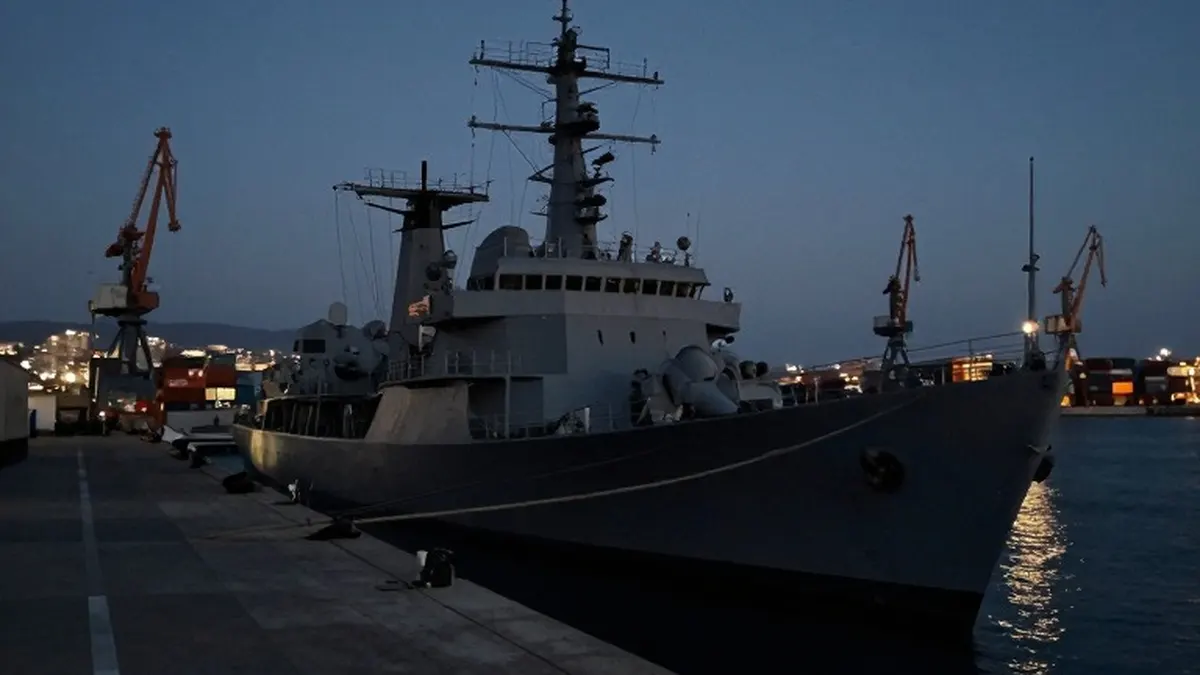
A Russian corvette named Merkury was attacked in a Mediterranean harbor in Benghazi, Libya, a location nearly 2,000 miles from Moscow. The vessel had been anchored in the port, leading its crew to potentially believe it was safe from enemy action. However, a coordinated night-time operation by Ukraine’s SBU intelligence agency and its armed forces successfully struck the ship. This audacious move has prompted observers to ask whether the conflict between Russia and Ukraine is spreading significantly beyond its immediate borders.
The answer to that question appears to be yes. The war has already been expanding, but this specific operation is likely to raise the stakes further. Ukrainian President Volodymyr Zelensky described the incident as an exemplary operation. In response, Russia, which has been conducting daily missile and drone strikes on Ukrainian civilian infrastructure, labeled the attack a dangerous escalation.
This incident follows a series of other long-range strikes. At the weekend, a suspected Ukrainian drone attack targeted a Russian dry-cargo ship in the Gulf of Finland, an event the Kremlin called an act of terrorism. Previously, Ukrainian drones struck the Russian Baltic oil terminal at Ust-Luga. Other bold attacks, which Zelensky has termed long-range sanctions, have hit targets deep inside Siberia, thousands of kilometers from the border.
One of the most notable prior operations was Operation Spider's Web last year. In that mission, a specially adapted lorry drove near a Russian strategic nuclear bomber airbase and released a swarm of explosive drones. The attack damaged or destroyed several expensive bombers. Additionally, Ukraine has been active in Africa, targeting Russian mercenaries from the Africa Corps, the successor to the Wagner Group.
The latest strike in Libya has alarmed more than just Moscow. The United Nations mission in Libya expressed deep concern over the incident. Libyan officials emphasized that their country is not a party to the war, although the Merkury and an accompanying cargo ship were berthed in the eastern part of the country. This region is controlled by Khalifa Haftar, a pro-Moscow warlord who styles himself Field Marshal.
The international shipping community is also watching closely. Throughout the year, the International Maritime Organisation has condemned attacks on commercial shipping in the Strait of Hormuz. With this new precedent set in a nominally neutral harbor, the industry is questioning where the line will be drawn if Ukraine can execute such bold attacks far from home.
The war has also been spreading in other parts of Europe as the fifth anniversary of Russia's full-scale invasion approaches. On Friday, several Russian projectiles landed inside Poland, just 60 miles from an Anglo-French military exercise. Polish Prime Minister Donald Tusk called this a deliberate provocation by Moscow. While not the first time Russian munitions have entered NATO territory, observers note that these border probes are becoming increasingly brazen.
Retaliation options for the West are limited due to existing sanctions and reduced energy imports from Russia, short of a direct military confrontation. Romania and Moldova have frequently been struck by Russian drones overflying to target Ukraine's Black Sea ports. Bulgaria and Romania have also suffered maritime drone attacks on commercial shipping in the Black Sea, with Romanian jets often scrambling to intercept incoming drones.
The three Baltic states, Estonia, Latvia, and Lithuania, all share borders with Russia and view themselves as being on the front lines. They have experienced anonymous attacks on military industrial facilities, which are blamed on agents acting for Moscow. Russia, in turn, suspects Estonia of being complicit in Ukrainian drone attacks that involve overflights of Estonian airspace.
Hybrid warfare is on the rise, characterized by anonymous and unattributable operations. These include cyber attacks, the burning of warehouses, and the use of surveillance or explosive drones. This autumn, three explosive drones were discovered at Germany's Leipzig-Halle airport, a resupply hub for Ukrainian cargo aircraft. Other incidents have involved explosive packages sent to Germany, Poland, and the UK, all of which Moscow denies involvement in.