Mumbai Launches Multibillion-Dollar Plan to Redevelop Dharavi
Mumbai has launched a multibillion-dollar partnership with the Adani Group to transform Dharavi, India's largest slum, into a modern urban hub, raising questions about displacement and the future of its one million residents.
By Leah Collins ·
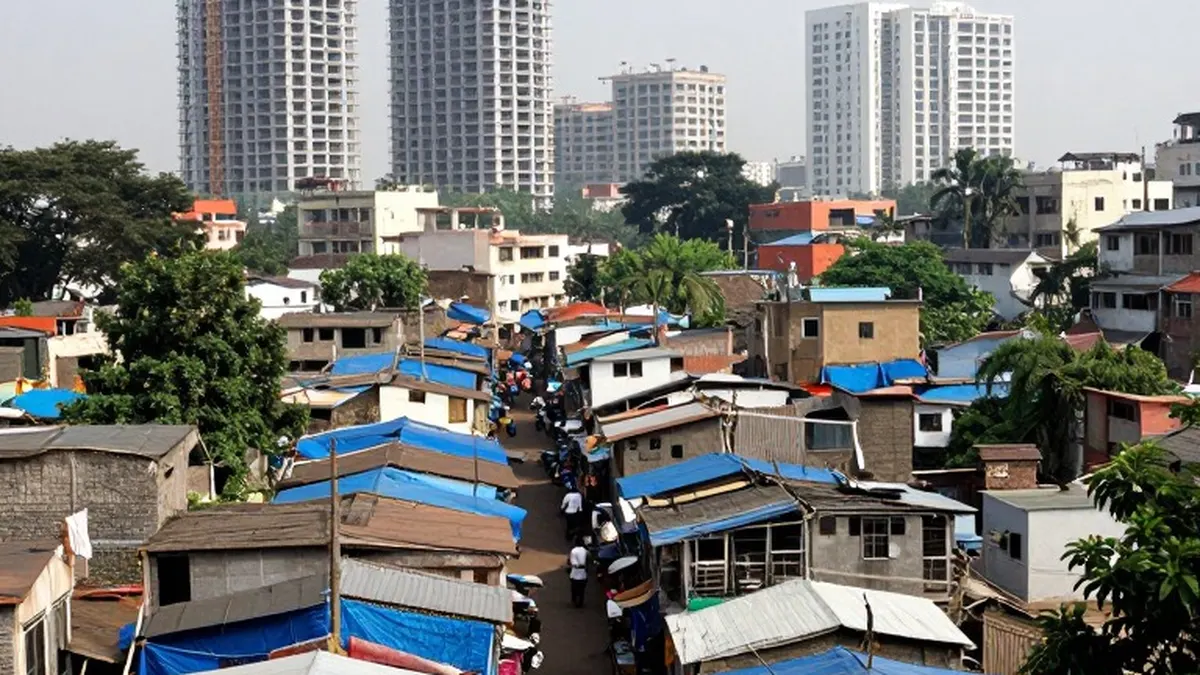
Mumbai is preparing to transform Dharavi, India's largest slum, into a modern urban development through one of Asia's most ambitious projects. Frontend loaders have begun clearing parts of the neighborhood, which is home to an estimated one million people across nearly 600 acres. The initiative aims to replace the dense, informal settlements with high-rise apartments and commercial towers, a scenario that mirrors the fictional narrative of the 2008 film Slumdog Millionaire.
The redevelopment is being driven by a partnership between the Maharashtra state government and the Adani Group, a conglomerate led by billionaire Gautam Adani. Mahendra Kalyankar, CEO of the state's Slum Rehabilitation Authority, stated that the project requires significant private capital to succeed. He described the new development as a better place to live, with modern sanitation and hygiene, contrasting sharply with the current conditions where thousands of residents often share limited water and toilet facilities.
Pranav Adani, nephew of the group's founder, characterized the existing living conditions in Dharavi as inhuman. He framed the venture as an opportunity to build a city within a city. The area is strategically located next to the Bandra Kurla Complex, a major business district that houses banks and multinational corporations. Local activists have compared the prime real estate to a valuable diamond, arguing that the project offers a lucrative chance to expand the business district.
Despite the glossy presentations, many residents face uncertainty about their future. Surveyors have spent over a year measuring homes and collecting paperwork to verify residency. Under the current rules, only families who can prove they lived in street-level homes before 2000 are guaranteed free apartments on the same site. Those who arrived later risk being relocated to discounted housing elsewhere or moved to rental units outside the area.
Samya Korde, a community organizer in Dharavi, warned that 70 to 80 percent of residents may be deemed ineligible for on-site units. Although the state government disputes this figure, citing incomplete surveys, critics argue that a clear majority will be displaced. Korde expressed a desire for development but emphasized that it should not result in the removal of the poor. She questioned whether the goal is to eliminate poverty or simply to remove the residents who live in it.
To showcase the future vision, the Adani Group opened an Experience Centre featuring a scale model of the proposed towers and a show suite with modern amenities. The facility includes promotional materials highlighting the integration of traditional artisan culture with new commercial spaces. However, trust between the developers and the local community remains low, particularly among those who have built thriving informal industries in the slum over generations.
Dharavi is an economic powerhouse, with informal businesses such as leather tanneries and plastic recycling generating an estimated one billion dollars in annual turnover. Tradespeople are skeptical of promises that these operations can be moved to high-rise work zones. Additionally, an underground economy involving slum landlords and other informal sectors is resisting the plan, which allocates strictly one apartment per family.
For individual residents, the stakes are deeply personal. Khan Kabir Akhtar, who lives with his elderly grandfather, wants improvements but fears displacement. He doubts he will secure a new on-site apartment and cannot afford market rates elsewhere. Nearby, Rubina Sharif watches with cautious hope as demolition crews begin work. Her home is slated for removal, but she is promised a unit in a new high-rise. She hopes the developers will cooperate with residents and fulfill their commitments.
The full transformation of Dharavi may take up to a decade, with the first new buildings potentially ready within two years. If successful, the project could serve as a blueprint for other rapidly growing cities in Asia and Africa. However, in a city where affordable housing is scarce, erasing Dharavi will not solve Mumbai's broader housing crisis. While some families will gain modern living spaces, hundreds of thousands others face the prospect of being uprooted and sequestered from view.