Three in Four Prediction Market Traders Say They Are Gambling
A new survey of online gamblers finds that most users view event contract trading as gambling, a view that aligns with a pending North Carolina bill seeking to regulate the platforms.
By Leah Collins ·
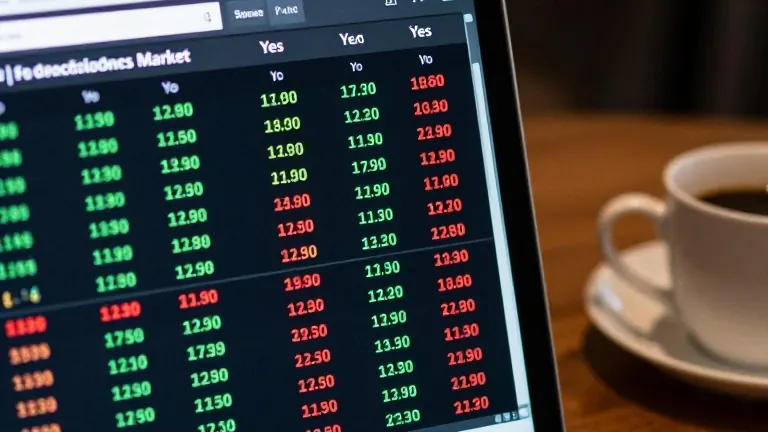
For the roughly 38 traders who answered a recent questionnaire, buying and selling prediction markets feels less like financial investing and more like a bet. In a report released on November 16, 31 of those 38 participants, or 81.6%, explicitly described their trading of event contracts as gambling. This finding offers a consumer perspective on a product that regulators often classify under financial markets rather than casinos.
The data comes from Gambling Nerd, a site that tracks online betting. Isaac Payne wrote the report, which was reviewed by Shaun Stack. The organization surveyed 102 active online gamblers through the platform Conjointly in October. Only the 38 respondents who had actually traded contracts received the specific questions about prediction markets. Within that smaller group, 26 participants, or 68.4%, supported regulating these platforms similarly to traditional gambling sites. Sports contracts were the most popular category, selected by 29 of the users.
The survey results land as North Carolina lawmakers consider how to categorize these digital markets. Rep. Pricey Harrison, a Democrat from Guilford County, co-sponsored House Bill 1171 with Marcia Morey and Deb Butler on April 30. The bill, titled Prohibit Gambling in Prediction Markets, would amend state law to explicitly include online prediction markets within the state's existing gambling prohibitions. It defines the markets as betting on the outcome of future events. The measure also allocates $10,000 for the State Lottery Commission to enforce the rules during the 2026 to 27 fiscal year.
As of November 22, the General Assembly tracker showed the bill had been referred to the House Rules, Calendar, and Operations committee on May 4. The proposal would take effect on December 1 if enacted, but it is not yet law. The lack of a specific North Carolina breakdown in the survey means the results do not definitively represent the views of Triad residents, though they reflect the experiences of a specific group of active bettors.
Regulators currently view event contracts through a different lens than state lottery commissions. The Commodity Futures Trading Commission describes these instruments as swaps used for hedging or speculation. In a typical scenario, a buyer might purchase a contract for 60 cents that pays $1 if a specific event occurs. If the event happens, the buyer nets a 40-cent profit. If it does not, the buyer loses the 60-cent cost. Customers can also sell their position before the final outcome is determined, though this depends on market liquidity.
This financial structure contrasts with the state's sportsbook system, where the State Lottery Commission guides players through licensed mobile wagering. While the screens may look similar, the rulebooks differ. The CFTC emphasizes that customers have the right to transparent information about fees, risks, and how to question settlement decisions. The survey provides a snapshot of how a small group of users perceives the experience, but determining how the general public in North Carolina understands these products will require further local research.
More Business · Bad Business · Report a business · Got a Story?