Asus ProArt P16 Review: A High-End Laptop for Local AI Workloads
The new Asus ProArt P16 utilizes Nvidia's RTX Spark technology to offer 128GB of memory, positioning it as a versatile machine for local AI, gaming, and productivity at a premium price point.
By Leah Collins ·
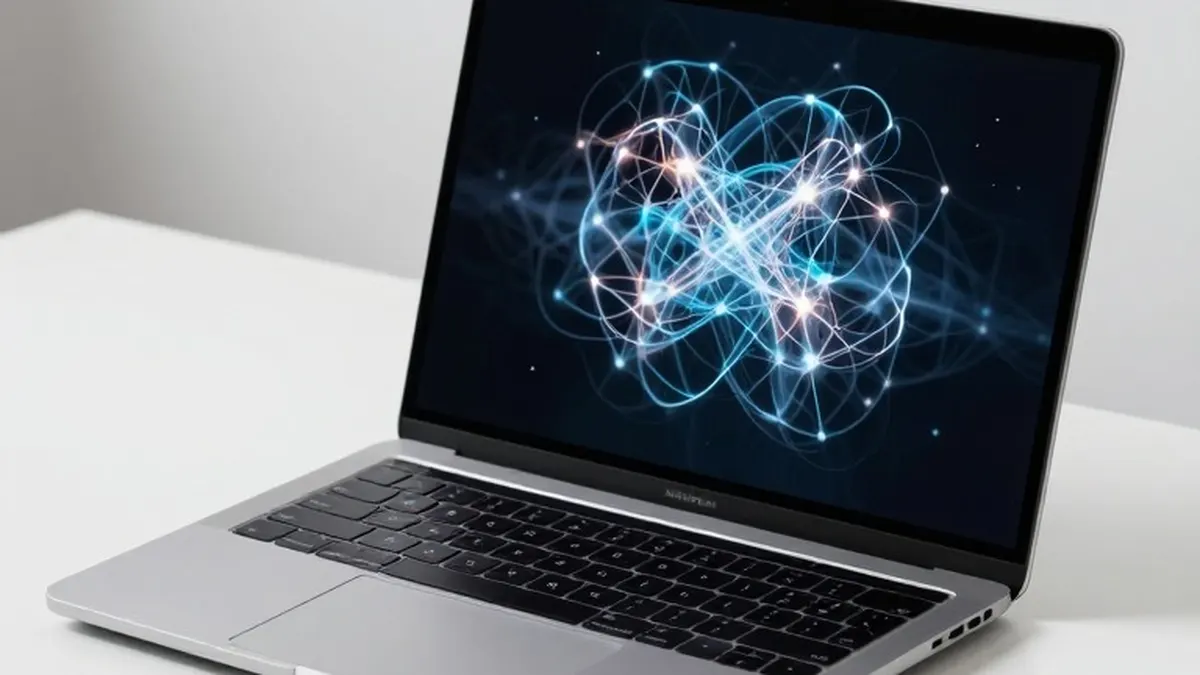
The market for new computers has become increasingly cluttered with artificial intelligence branding in recent years. While many laptop manufacturers have leaned into AI marketing, the underlying capabilities often did not match the hype. However, the introduction of Nvidia’s RTX Spark platform suggests a potential shift toward more substantial AI integration in daily drivers. Asus has incorporated this new chip into its latest ProArt series, creating a device that supports a large amount of memory specifically for running local AI models.
The Asus ProArt P16 does not feature a traditional discrete graphics card in the conventional sense. Instead, it relies on a unified architecture that can handle gaming, productivity, and AI tasks. This versatility comes with a significant cost. For users who wish to run multiple AI agents simultaneously on their laptop, the top-end configuration of the ProArt P16 is priced at $7,000. Despite being available on the Windows operating system, which may make it more approachable for some users, setting up local AI workflows still demands a considerable amount of experimentation and troubleshooting.
To understand the value proposition of the ProArt P16, it is necessary to examine its hardware specifications first. Nvidia markets the RTX Spark as a single device capable of handling AI, creative work, and gaming. Asus has produced many iterations of the ProArt line, but this model is distinct for integrating the new Spark RTX chip in its most powerful form. The core of this system is the Spark N1X processor, which features a 20-core Grace CPU.
This CPU is composed of two distinct types of Arm cores. There are 10 high-performance Arm Cortex-X925 cores designed for demanding tasks, alongside 10 power-efficient Arm Cortex-A725 cores for lighter workloads. The high-performance cluster can boost to speeds between 4.0 and 4.1 GHz, while the efficiency cores reach a peak of 2.8 GHz. The processor includes a total of 49MB of memory cache, which is divided into 24MB of shared Level 3 cache and 25MB of Level 2 cache.
Graphical processing and AI computations are handled by the Nvidia GB20B Blackwell GPU. In this specific configuration, the GPU contains 6,144 cores spread across 48 streaming multiprocessors. It is supported by its own dedicated 24MB Level 2 cache. These components utilize 5th-generation Tensor Cores, which enable the full range of Nvidia’s proprietary technologies. This includes support for DLSS, Reflex, ACE, G-Sync, CUDA, and NVFP4.
In terms of raw performance metrics, the system delivers up to 31 TFLOPS of FP32 graphical performance. For artificial intelligence tasks, it provides approximately 1,000 TOPS of FP4 compute power. This combination of high-end processing and substantial memory capacity aims to address the limitations of previous laptop designs that struggled with large local models.
The inclusion of up to 128GB of memory is a key differentiator for this device. Such a large memory pool allows users to load complex AI models directly onto the laptop without relying heavily on cloud services. This local processing capability can offer greater privacy and lower latency for AI-driven applications. However, the high price tag indicates that this machine is targeted at professionals and enthusiasts who require this level of performance for their daily workflows.
The transition to Arm-based architecture in such a high-performance laptop represents a significant step for the industry. The mixed core design of the Grace CPU attempts to balance raw power with energy efficiency. This approach is critical for a laptop form factor, where thermal management and battery life are always concerns. The high boost clocks of the performance cores suggest that Asus and Nvidia have prioritized speed for critical tasks, even if it impacts overall power consumption.
The integration of Blackwell GPU technology further solidifies the device's position in the high-end market. The support for NVFP4 and other advanced AI formats suggests that the hardware is ready for the next generation of AI models. As these models continue to grow in size and complexity, having dedicated hardware with high memory bandwidth and compute density becomes essential for local deployment.
Ultimately, the Asus ProArt P16 serves as a proof of concept for a future where personal computers are powerful enough to run sophisticated AI locally. While the $7,000 price point may limit its appeal to the average consumer, it offers a glimpse into what is possible when advanced CPU and GPU architectures are combined. For those who need a single machine to handle diverse computational needs, this laptop presents a compelling, albeit expensive, option.
More News · National news · Report a business · Got a Story?