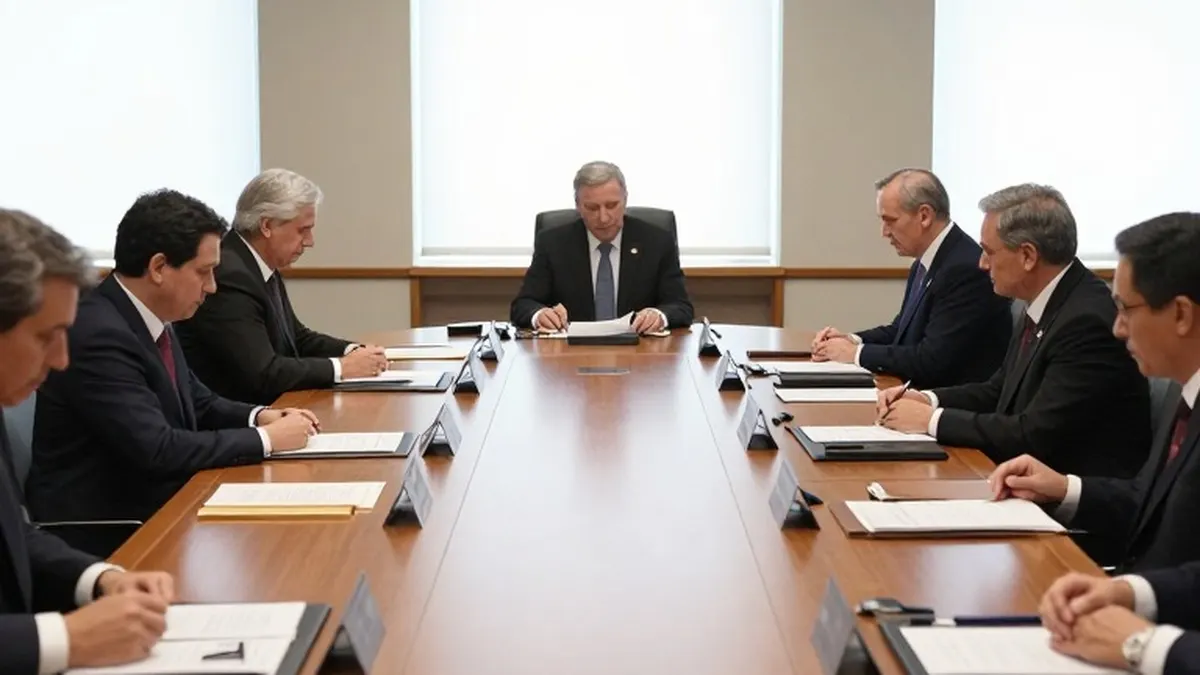
New Knesset Committees to Address Arab Sector Issues and Post-Election Reforms
The Knesset Arrangements Committee approved the creation of four new special committees, granting Arab party leaders significant oversight roles in crime and socioeconomic matters.
By Leah Collins ·
The Knesset Arrangements Committee approved the formation of four new special committees on Monday, marking a significant shift in the parliamentary structure. These bodies will be chaired by members of the coalition led by Gadi Eisenkot, the head of the Yashar party. This coalition secured a majority in the Knesset following the general election held on October 27, placing it in a position of power over the bloc led by Prime Minister Benjamin Netanyahu.
Two of the newly established committees will specifically focus on issues affecting the Arab sector. The leadership of these bodies has been assigned to the heads of the major Arab political parties. Mansour Abbas, the chairman of the Ra’am party, will serve as the head of the first of these committees. The second committee will be led by Yousef Jabareen, the leader of the Joint List.
The first committee to be established is the Special Committee for Combating Crime and Violence in Arab Society, which Abbas will chair. Its mandate includes overseeing efforts to tackle organized crime, protection racketeering, and the proliferation of illegal weapons. Additionally, the committee will monitor the implementation of government programs designed to enhance personal security and strengthen the operations of police and law enforcement agencies within Arab localities.
The second committee, dedicated to socioeconomic equality, will be chaired by Jabareen. This body is tasked with overseeing a multi-year plan aimed at advancing Arab localities. Specific areas of focus include programs for at-risk youth, as well as planning and construction projects. This encompasses the development of new industrial zones and the expansion of residential neighborhoods in these areas.
The third special committee will oversee the implementation of legislation passed to prosecute terrorists involved in the Hamas attacks of October 7, 2023. Yulia Malinovsky, a member of the Knesset from the Yisrael Beytenu party, will chair this group. The Knesset approved the relevant law in May, which grants authorities the power to impose the death penalty and conduct public trials at a military court in Jerusalem.
Despite the passage of this legislation, it has not yet been fully implemented. Estimates provided in October suggested that indictments for the terrorists involved in the October 7 attacks could be delayed until 2028. This delay is attributed largely to budget-related issues that have stalled the judicial proceedings.
The fourth committee will focus on strengthening the Negev and Galilee regions. Noam Tibon, a member of the Knesset from the B’Yachad party, will lead this initiative. The establishment of these committees coincides with the Eisenkot-led bloc gaining greater control over the parliamentary agenda. This shift in power was solidified last week when the Knesset plenum voted to replace Speaker Amir Ohana of the Likud party with Matan Kahana of the Yashar party.
Although Netanyahu remains in office as the head of a caretaker government, the new speaker and the majority bloc now control parliamentary proceedings. The coalition has advanced key legislation with the support of Arab parties, even though a formal government has not yet been formed. Last week, the plenum also passed a group of bills in preliminary readings aimed at repealing significant components of the judicial overhaul passed by Netanyahu’s outgoing coalition.
These repeal bills returned to committee for further deliberation on Monday. To be enacted, each bill requires three additional readings. The original judicial overhaul legislation was passed during the previous Knesset session amid a deep rift between the government and the judiciary, including Chief Justice Yehuda Baharav-Miara. Earlier this month, the Yashar party also submitted additional bills, including a proposal to establish a state commission of inquiry into the events of October 7, a measure that was previously blocked by Netanyahu and his administration.