Prickly pear cactus adapts to rainfall with temporary leaves, researchers report
New findings show that the Opuntia ficus-indica develops short-lived leaves during wet periods to accelerate growth, offering insights for agricultural adaptation in arid climates.
By Leah Collins ·
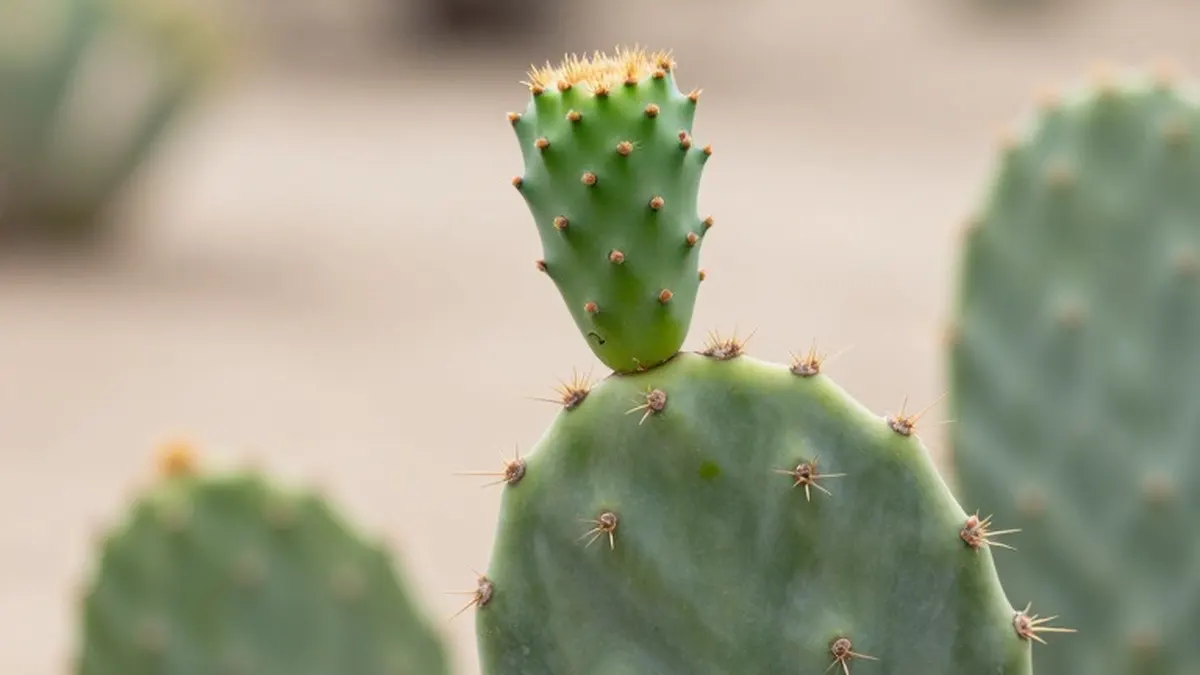
A new study conducted by researchers at Ben-Gurion University of the Negev and the Agriculture Ministry’s Volcani Institute has uncovered a unique adaptation in the prickly pear cactus. The research demonstrates how the plant, known as the sabra in Hebrew, alters its physiological processes to maximize growth during rare rainy periods while maintaining its ability to survive prolonged droughts.
This cactus species is widely cultivated in Israel, where it thrives on limited winter precipitation and long dry summers. To conserve water, the plant’s distinctive green pads typically open their pores only at night to absorb carbon dioxide for photosynthesis. This nocturnal strategy minimizes water loss through evaporation, although it results in a slower overall growth rate compared to plants that operate during the day.
The study identified a previously understated mechanism: during periods of rain, the cactus pads develop tiny cone-shaped leaves. These structures are approximately one centimeter in length and are shed after roughly six weeks. Because they are small and short-lived, these leaves have often gone unnoticed by casual observers.
Scientists determined that these temporary leaves allow the plant to switch to a different metabolic mode. Unlike the pads, the leaves open their pores during daylight hours, enabling the cactus to absorb carbon dioxide in sunlight. This process functions similarly to that of most other plants. The carbon absorbed through these leaves provides about one-fifth of the material needed for young pads to grow.
To verify the importance of these leaflets, researchers conducted experiments where they either removed the tiny leaves or sealed their pores with clear nail polish. After three weeks, the treated pads were found to be approximately one-third smaller and nearly 40 percent lighter than untreated controls, confirming the significant contribution of the leaves to rapid growth.
Prof. Ilya Gelfand of BGU’s Jacob Blaustein Institutes for Desert Research described the plant’s behavior as having two distinct gears. He explained that the cactus operates in a saving mode for most of the year, breathing at night to retain moisture. When rain arrives, it shifts to a faster gear by producing temporary leaves that function like those of regular plants. Once the wet period ends, the leaves drop, allowing the cactus to grow quickly during brief favorable conditions without sacrificing its drought resistance.
According to the university, Opuntia ficus-indica is cultivated on approximately 6.4 million acres worldwide. It is grown primarily in parts of Africa and Latin America for fruit production, livestock feed, and desertification control. The institution noted that understanding how the plant accelerates growth during short wet spells could assist farmers and plant breeders as global climates become hotter and drier.
The study, led by doctoral student Patrick Mdemba, was published in the October edition of the Journal of Experimental Botany. While native to central Mexico, the cactus has become a cultural symbol in Israel, representing the perceived character of the typical Israeli: tough on the outside but sweet within.
The findings highlight the plant’s resilience and its potential role in sustainable agriculture in arid regions. By identifying the specific mechanism that allows for rapid growth during limited water availability, the research provides valuable data for developing crops that can adapt to increasingly erratic weather patterns.